
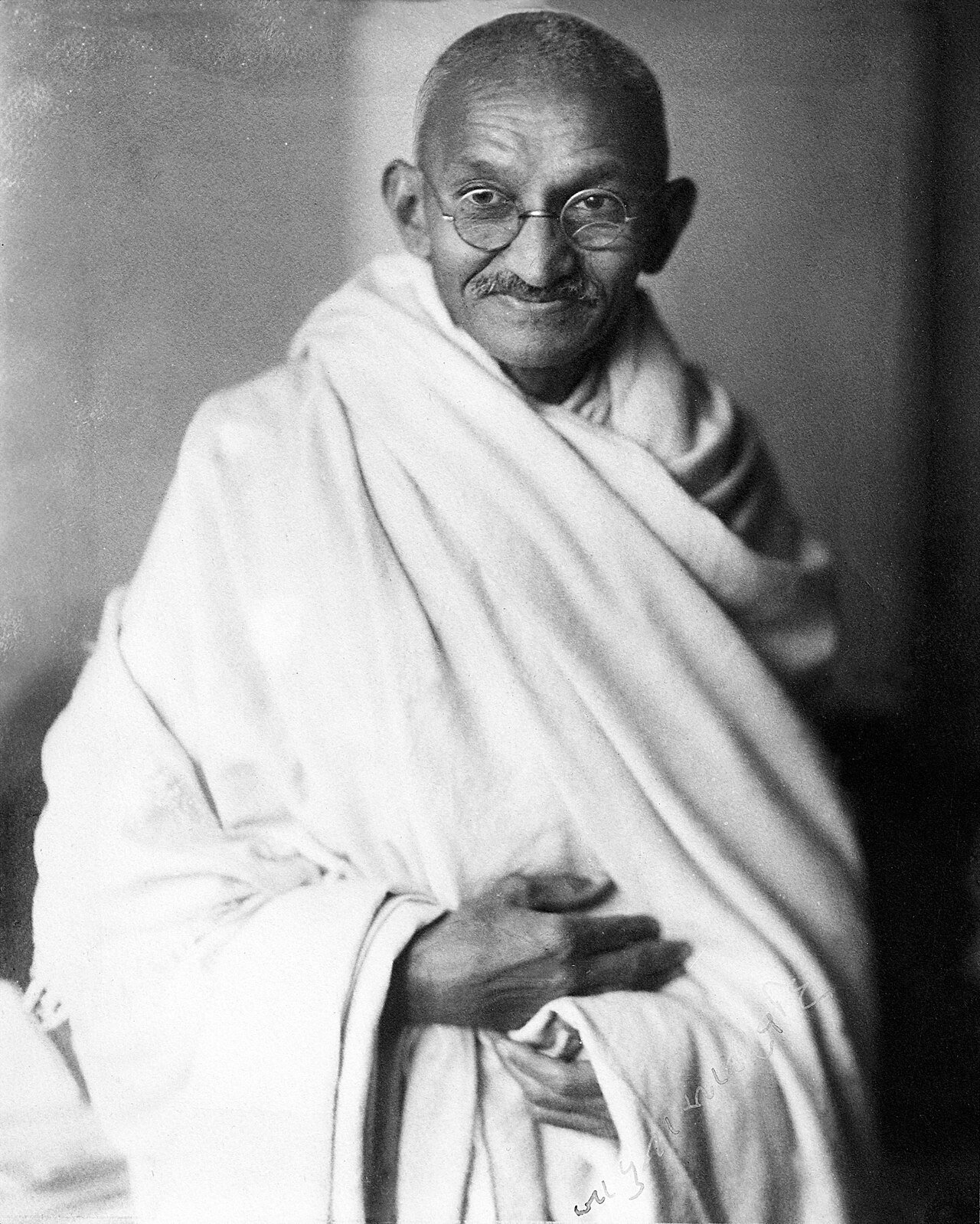

Every year on October 2, India observes Gandhi Jayanti, and the global community marks the International Day of Non-Violence. This day commemorates the birth of Mohandas Karamchand Gandhi—born on October 2, 1869, in Porbandar, Gujarat. More than a historical retrospective, his birth anniversary serves as an annual audit of our collective moral compass, testing whether humanity can resolve its deepest conflicts through truth (Satya) and active harmlessness (Ahimsa).
From South Africa to National Awakening
Gandhi’s political trajectory was shaped not in the halls of parliamentary power, but on the fringes of society. After studying law in London, he arrived in South Africa in 1893 to represent a commercial client. Confronted with systemic racial segregation—most notoriously when he was forcibly thrown off a train in Pietermaritzburg for refusing to leave a first-class compartment—he spent the next two decades forging the strategy of Satyagraha (soul-force or truth-force).
When Gandhi returned to India in 1915, he transformed an elite, petition-writing freedom struggle into a mass democratic upheaval. Rather than appealing solely to intellectuals and lawyers, he aligned his voice with tenant farmers in Champaran (1917), textile workers in Ahmedabad, and peasants in Kheda (1918).
Champaran Satyagraha
1917
Led a successful agitation for indigo cultivators forced into exploitative British contracts, proving non-violent civil disobedience could defeat colonial statutes.
Non-Cooperation Movement
1920–1922
Urged Indians to boycott foreign cloth, schools, legal courts, and titles. Suspended by Gandhi after protesters turned violent at Chauri Chaura, underlining his non-negotiable insistence on peace.
The Dandi Salt March1930
Walked 240 miles to the Arabian Sea to make salt, turning an everyday domestic staple into an international indictment of imperial tax monopolies.
Quit India Movement
1942
Issued the historic “Do or Die” call demanding immediate British departure, sparking nationwide civil resistance despite mass arrests of Congress leadership.
The Four Pillars of the Gandhian Ethos
Gandhi’s political victories were inextricable from his social and ethical philosophies:
Satyagraha and Ahimsa: Non-violence, for Gandhi, was not passive surrender or cowardice; it was the weapon of the strong. Satyagraha held that the oppressor’s conscience could be awakened by accepting suffering rather than inflicting it.
Swadeshi and Gram Swaraj: True freedom required decentralization. Gandhi viewed Indian villages as the bedrock of self-sufficiency (Gram Swaraj). Through the promotion of hand-spun cloth (Khadi) on the traditional wheel (charkha), he sought to rebuild rural economies destroyed by industrial colonial imports.
Social Reform and Sarvodaya: He viewed independence as hollow if internal social hierarchies remained unchallenged. He campaigned actively against untouchability, establishing the Harijan Sevak Sangh, advocating for temple entry, and insisting on sanitation as a civic duty.
Trusteeship and Sustainability: Long before modern environmentalism, Gandhi warned against consumerist exploitation, famously observing that the Earth provides enough to satisfy every human’s need, but not their greed. He proposed that the wealthy act as “trustees” of societal wealth for the common good.
Global Resonance
When India achieved independence on August 15, 1947, Gandhi was not celebrating in New Delhi; he was fasting in Noakhali and Calcutta to halt communal riots sparked by Partition. His assassination on January 30, 1948, silenced his voice, but cemented his philosophy on the world stage.
His methods served as the blueprint for 20th-century rights movements:
Martin Luther King Jr. cited Gandhi as the primary moral and tactical influence for the American Civil Rights Movement.
Nelson Mandela and the African National Congress drew upon satyagraha to challenge apartheid in South Africa.
Vaclav Havel and Eastern European dissidents applied civil resistance to dismantle authoritarian regimes.
The Relevance of Gandhi Today
In an era fragmented by digital polarization, asymmetric warfare, and ecological crises, Gandhi’s message feels less like archival history and more like an urgent prescription. His insistence that the means must justify the ends challenges modern political expediency. Celebrating his birth anniversary is an invitation to practice civil courage, question unchecked consumerism, and commit to empathy across societal divides.