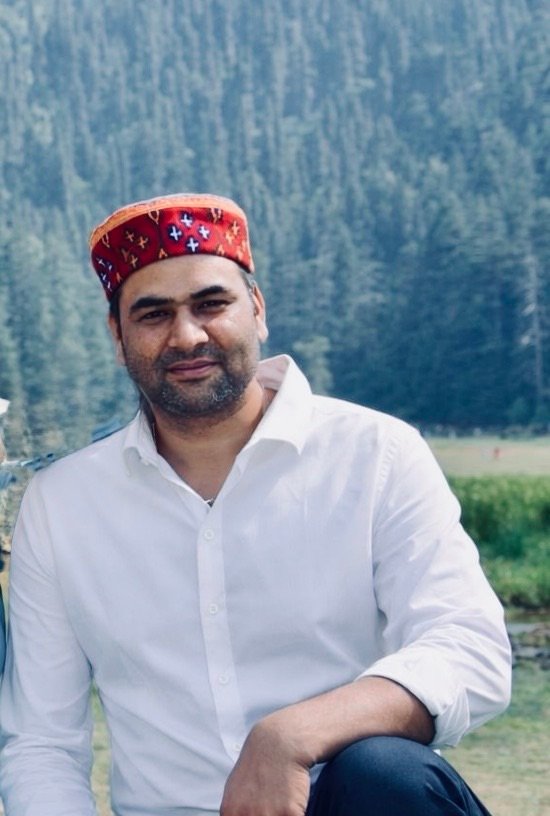


Manzoor Ahmed Naik
The districts of Rajouri and Poonch, nestled in the picturesque Pir Panjal range of Jammu and Kashmir, represent a unique political and social landscape where the realities of national security and democratic aspirations coexist every day. These border districts, located close to the Line of Control, have for decades lived under the shadow of cross-border tensions, terrorism, and uncertainty. Yet, despite these challenges, the people of Rajouri and Poonch have consistently demonstrated unwavering faith in democracy and a deep commitment to the nation. Their story is not merely one of hardship—it is also a story of resilience, patriotism, and the enduring spirit of democracy.

Border politics in Rajouri–Poonch cannot be understood without acknowledging the everyday realities of people living near the Line of Control. Many villages in these districts have witnessed cross-border shelling, displacement, and security operations during periods of tension between India and Pakistan. In recent decades, incidents of ceasefire violations have occasionally disrupted the lives of civilians, forcing families to seek shelter in bunkers or temporarily migrate to safer areas. However, even during such challenging times, the people of these districts have remained steadfast in their commitment to the Indian nation.
For many residents, the Indian Army is not merely a security force but also a partner in community welfare. Institutions like the Indian Army have played a significant role in maintaining peace and assisting local communities through medical camps, educational initiatives, and infrastructure development in remote areas. These initiatives have strengthened the bond between the armed forces and the local population, reinforcing a shared sense of national belonging.
Despite facing security challenges, the people of Rajouri and Poonch have consistently participated in democratic processes with enthusiasm. High voter turnout during elections reflects their belief in the power of the ballot.
Even during difficult periods, residents have come out to vote in elections conducted by the Election Commission of India, proving that democratic values remain deeply rooted in the region.
The peaceful conduct of elections in these border districts sends a strong message to the world: democracy continues to thrive even in areas that have faced decades of conflict. For many villagers, voting is more than a civic duty—it is an expression of their identity as proud citizens of India.
Over the years, Rajouri and Poonch have unfortunately witnessed several tragic incidents linked to cross-border terrorism. Attacks on civilians, security personnel, and infrastructure have left painful memories for many families.
Yet, instead of succumbing to fear or despair, the people of these districts have repeatedly shown courage and resilience. Communities have stood together during difficult times, supporting the families of victims and cooperating with security agencies to maintain peace. Such unity highlights the strong social fabric of the region, where people of different communities live together with mutual respect and shared values.
In recent years, development has increasingly become a central theme in the political discourse of border districts. Improved roads, healthcare facilities, educational institutions, and connectivity projects have begun transforming the socio-economic landscape of Rajouri and Poonch.
National initiatives aimed at strengthening border infrastructure and rural development have brought renewed hope to local communities. Improved connectivity not only enhances economic opportunities but also helps integrate remote areas more closely with the rest of the country.
Tourism potential in the Pir Panjal region—its green meadows, rivers, lakes and scenic landscapes—also offers significant opportunities for economic growth if properly developed. Development, therefore, is not merely an economic priority; it is also a powerful instrument for strengthening peace and stability.
One of the most inspiring aspects of Rajouri–Poonch is the strong sense of patriotism among its people. Many families in these districts have proudly served the nation in the armed forces, paramilitary forces, and police services. Stories of bravery and sacrifice are deeply embedded in the collective memory of the region. Local youth often view service to the nation as a matter of pride and honor. This patriotic spirit reflects a simple yet powerful truth: those who live closest to the nation’s borders often carry the strongest sense of national identity.
The political discourse surrounding border districts should move beyond narratives of conflict and security alone. While security remains crucial, equal emphasis must be placed on development, education, tourism, and youth empowerment. Rajouri and Poonch are not merely frontier districts—they are vibrant regions filled with potential, culture, and hardworking people who deserve greater attention in policy and political discussions. The story of these districts ultimately demonstrates that democracy and national unity can flourish even in the most challenging environments.
The people of Rajouri and Poonch embody the true spirit of India—resilient, democratic, and deeply patriotic. Living on the nation’s frontier, they face challenges that many others never experience. Yet their faith in the democratic system and their loyalty to the nation remain unshaken.
Their story is a reminder that the strength of a nation does not lie only in its institutions or military power, but also in the courage and commitment of its citizens. In the valleys and mountains of the Pir Panjal, where the echoes of history and hope meet, democracy continues to live—and the tricolour continues to fly with pride.