

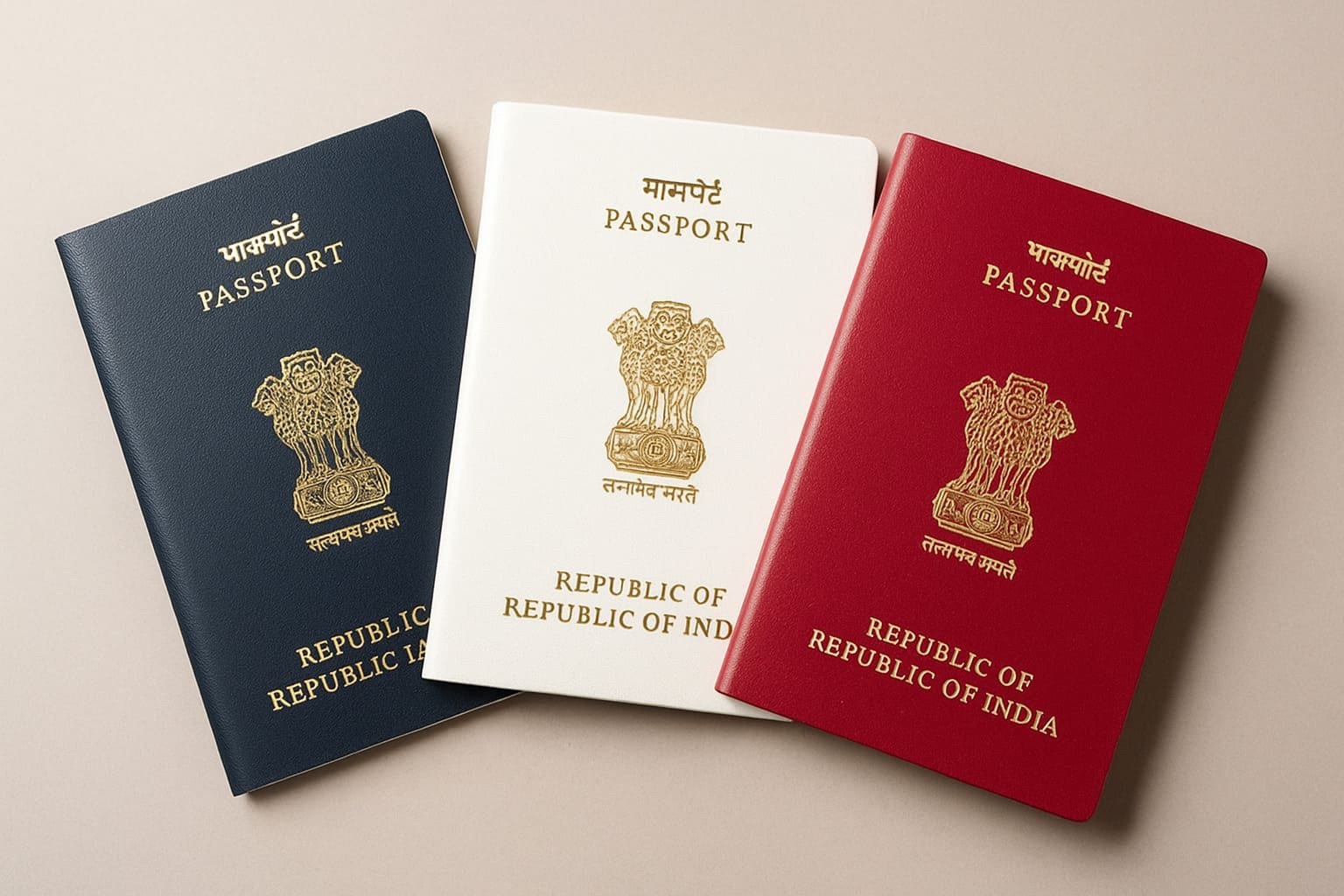

The Ministry of External Affairs (MEA) recently sparked discussion after a senior official stated during Passport Seva Divas that an Indian passport is primarily a travel document and should not be considered definitive proof of citizenship. The remark led to confusion on social media, with many questioning the legal status of passports, Aadhaar cards and voter identity cards in establishing Indian citizenship.
The government later clarified that no new policy had been introduced. Officials explained that the statement merely restated the long-standing legal position under existing Indian laws. According to the government, an Indian passport has always been treated mainly as a travel document and not as final evidence of citizenship.
This position stems from the Passports Act, 1967. Under Section 20 of the Act, the Central Government has the authority, in exceptional cases and in the public interest, to issue a passport or travel document to a person who may not be an Indian citizen. Therefore, while passports are generally issued to citizens, their possession alone does not conclusively establish citizenship.
The judiciary has also acknowledged this principle. In a 2013 ruling, the Bombay High Court observed that merely holding an Indian passport cannot be regarded as conclusive proof that a person is an Indian citizen.
The framework governing citizenship is laid down in the Citizenship Act, 1955. The law provides five methods through which Indian citizenship can be acquired: by birth, descent, registration, naturalisation and incorporation of territory. Eligibility conditions, particularly for citizenship by birth, have evolved over time and depend on factors such as the date of birth and the citizenship status of one’s parents.
Individuals who obtain citizenship through registration or naturalisation are issued Citizenship Certificates. However, those who become citizens by birth or descent generally do not receive such certificates, and their status is determined through the provisions of the Citizenship Act and related legal records.
Although documents such as passports, Aadhaar cards, voter identity cards and PAN cards are important government-issued records, each serves a distinct legal purpose and none of them, by itself, automatically constitutes conclusive proof of Indian citizenship.