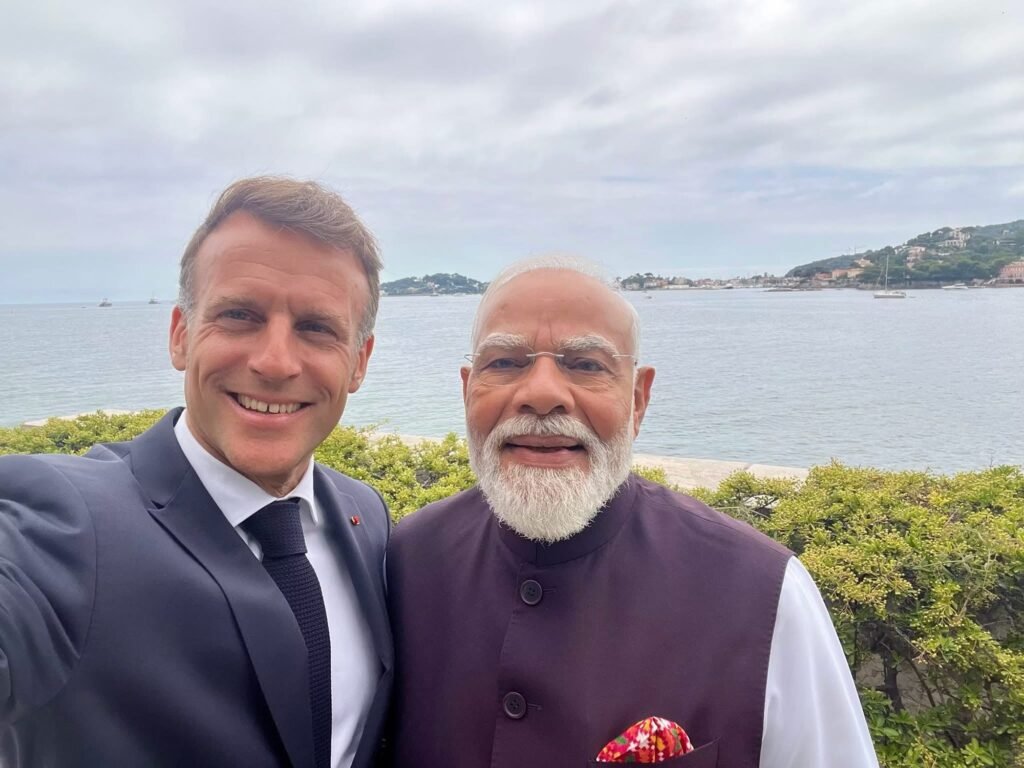

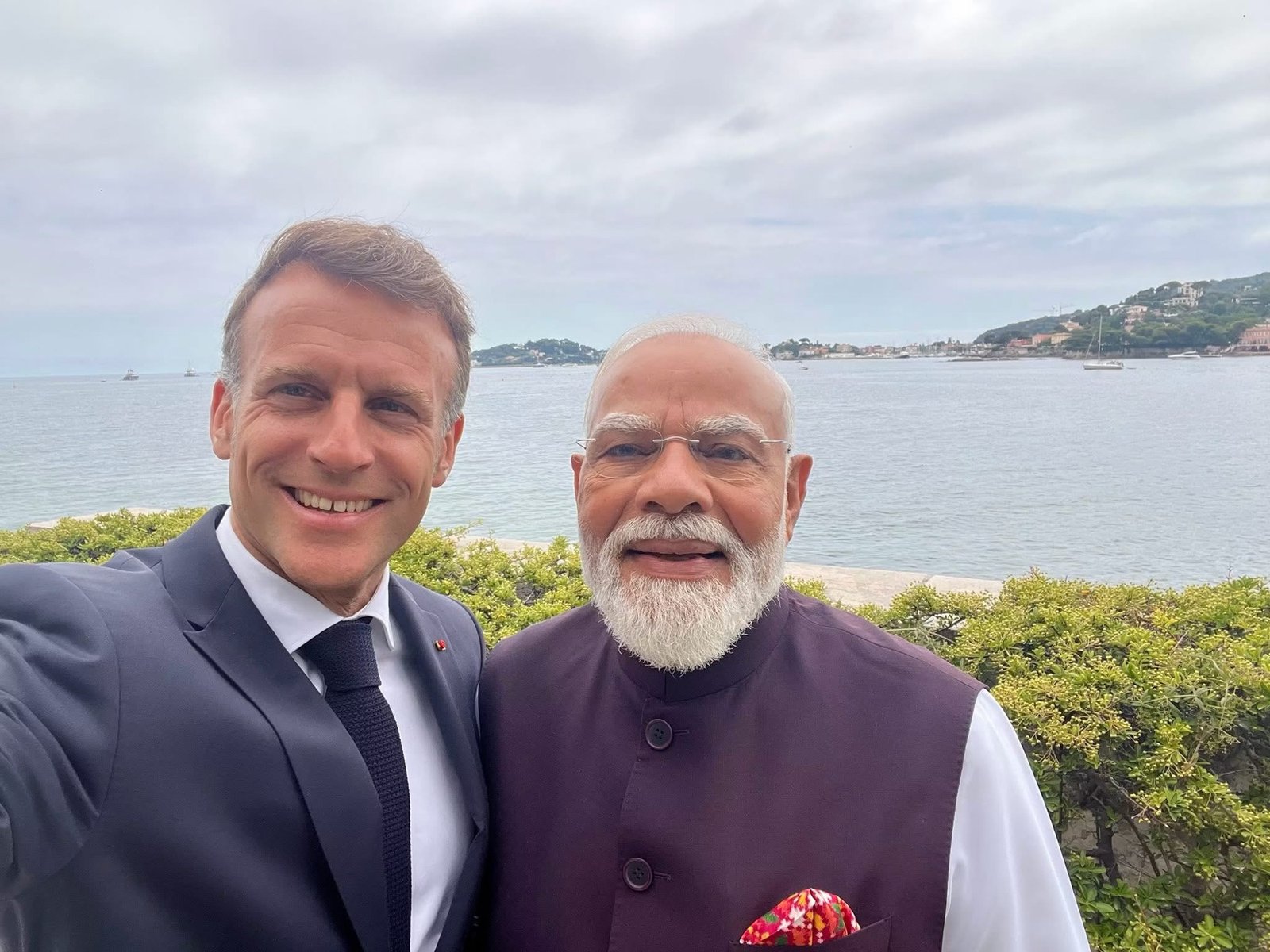
Modi and Macron agree on deeper collaboration in AI, trade, critical minerals, nuclear energy, and emerging technologies during talks in Nice.
NICE (France), June 14: India and France have taken a significant step towards strengthening their strategic partnership by adopting the “Innovation Roadmap 2030” and launching a new Dialogue on Economic Security during high-level talks between Prime Minister Narendra Modi and French President Emmanuel Macron in Nice.
The meeting took place on the sidelines of the Bharat Innovates technology conference, where both leaders reviewed the growing cooperation between the two nations across innovation, technology, trade, and global strategic issues.
According to an official statement, the newly adopted Innovation Roadmap 2030 is aimed at providing long-term direction to bilateral cooperation in emerging technologies and innovation-driven sectors. As part of the initiative, India and France will establish a Joint Artificial Intelligence (AI) Working Group to expand collaboration in AI research, development, and applications.
The two leaders also welcomed the signing of 19 agreements between institutions and organizations from the innovation ecosystems of both countries, reflecting the increasing engagement between industry, academia, and technology sectors.
Emphasizing the importance of stronger economic ties, Prime Minister Modi and President Macron called for the swift implementation of the India-European Union Free Trade Agreement (FTA). To accelerate economic engagement, both sides agreed to create a High-Level Mechanism aimed at doubling bilateral trade over the next five years. Discussions also covered cooperation in small and medium enterprises (SMEs), railways, and civil aviation.
In a move to enhance economic resilience, India and France agreed to strengthen cooperation in securing critical mineral supply chains under the newly established Economic Security Dialogue. The initiative seeks to reduce vulnerabilities in strategic sectors and ensure reliable access to key resources required for advanced industries.
The leaders also exchanged views on major international developments, including the situations in West Asia and Ukraine, while reaffirming their commitment to dialogue and international cooperation on global challenges.
Prime Minister Modi expressed appreciation for France’s decision to introduce visa-free airport transit facilities for Indian travelers and invited leading French universities to establish campuses in India under the framework of the National Education Policy.
Space cooperation and nuclear energy also featured prominently in the discussions. Both sides explored opportunities for greater private-sector participation in the space industry and reviewed developments related to India’s nuclear energy sector.
Addressing the media, Foreign Secretary Vikram Misri highlighted emerging opportunities for French nuclear companies to participate directly or in partnership with Indian firms in future nuclear projects, including advanced small modular reactor technologies.
He also confirmed that discussions between French energy company EDF and Nuclear Power Corporation of India Limited (NPCIL) regarding the long-pending Jaitapur Nuclear Power Project in Maharashtra remain ongoing. The proposed project, comprising six reactor units, has been under consideration for more than a decade.
Following the conclusion of his engagements in France, Prime Minister Modi departed for the next leg of his European tour, which includes visits to Austria and Slovakia.